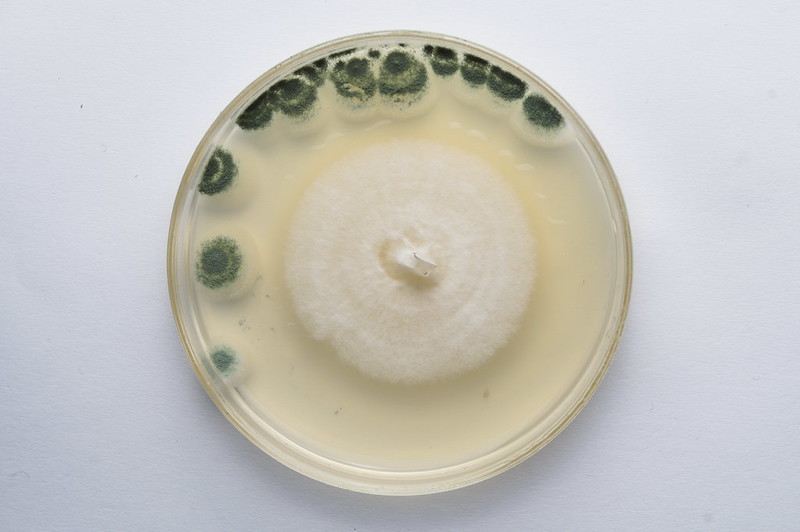
I have been making an effort to actually identify the contaminants that grow in my petri dishes. In this case the contaminants are those dark green spore islands.
Looking at them under the microscope reveals that the spores of this species are produced at the tip of these finger-like structures. These spore-producing structures are called "conidiophores". The presence of these structures is a characteristic of the phylum Ascomycota, within the fungi kingdom.
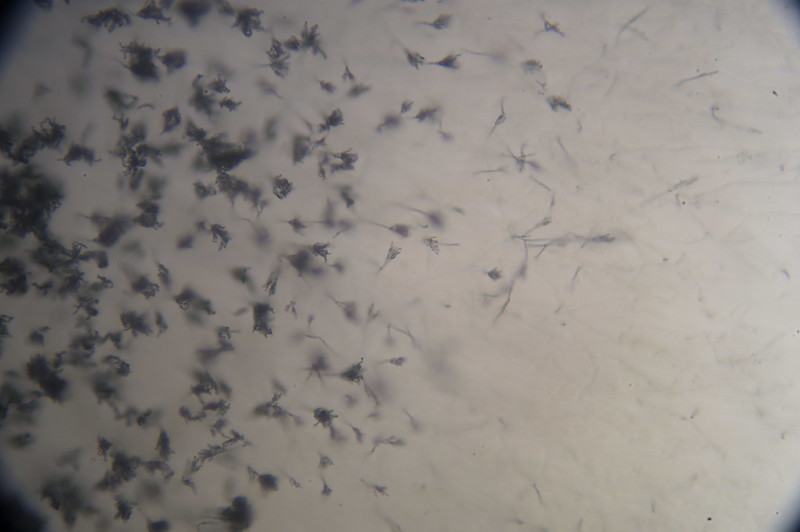
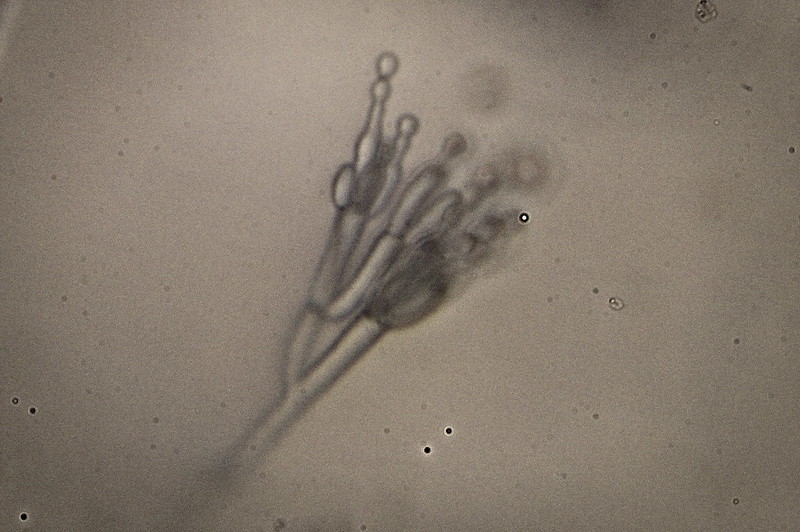
Different groups of ascomycetes produce conidia with different morphologies. Looking through microscopic pictures I can see that this morphology of conidia is characteristic of the Penicillium genus.
I am having trouble narrowing it down to the species level. Maybe P. digitatum or P. roqueforti, based on the macroscopic morphology and how common they are. But there are too many other options, so it is difficult for me to know for sure. If anyone around here is good with identification, please let me know.