Mycology

5012 readers
1 users here now

founded 4 years ago
MODERATORS
26


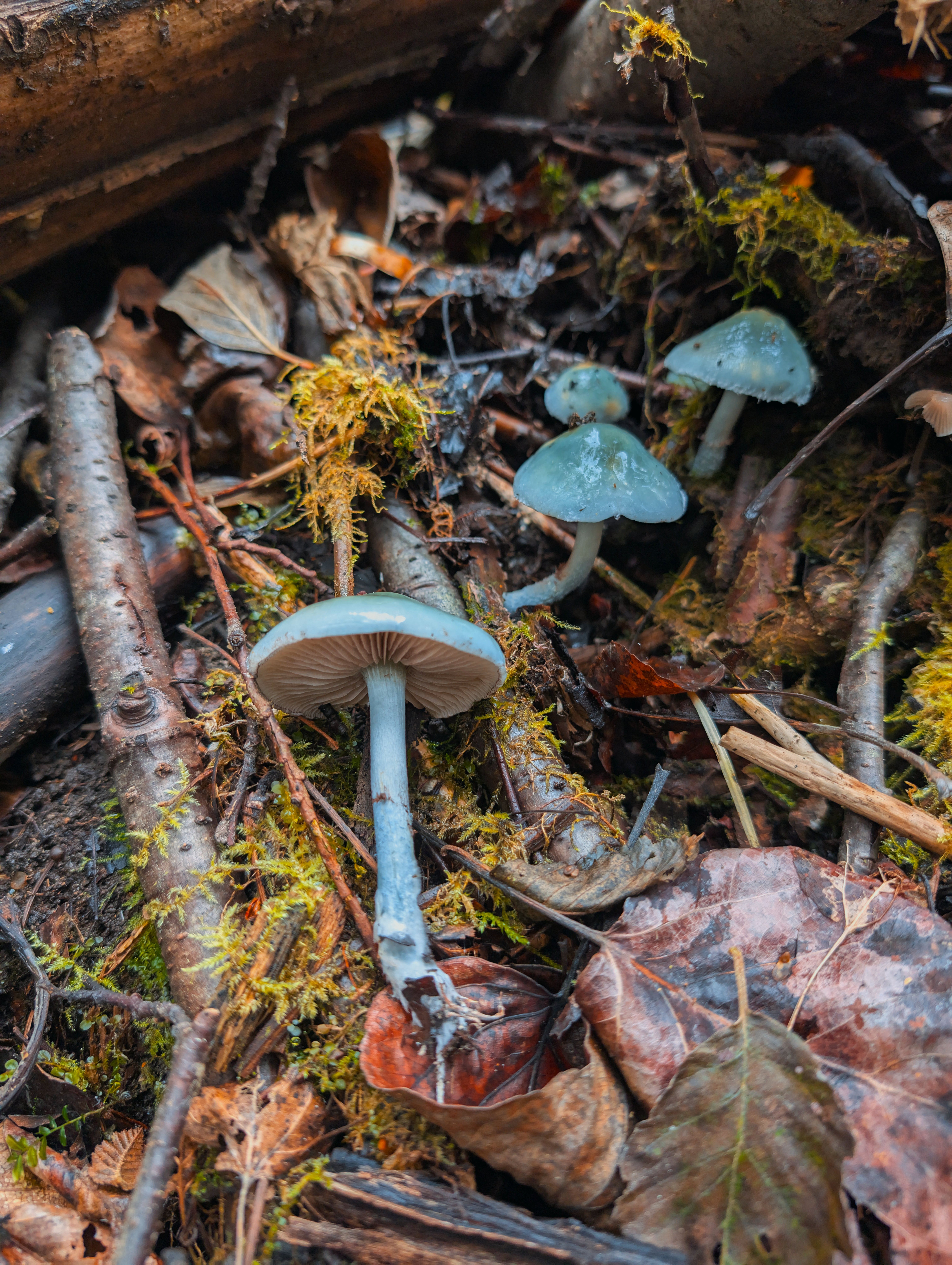
Sadly, only very rotten one on the left was. The other two are Cortinarius sp. with nearly identical caps.

27


28


cross-posted from: https://lemmy.world/post/37508438

Video description by BionicandtheWires:

This is a mushroom playing in the wild in some woods near Glossop in Manchester. The attached sensors measure bio-electrical fluctuations in the mushroom. The fluctuations are converted into signals that control the robotic arms. The keyboard playing a synth in Ableton Live.

Our art reveals the hidden world of nature. Plants and fungi are often overlooked, but they're not so different from us. Scientists have found they can communicate with each other, remember things, and solve problems.

We are very proud to say that this video was featured by Nature in Sept 2025.

If you like what we're doing please join as a channel member to unlock exclusive shorts, early video releases, and behind-the-scenes content. Every membership helps us build new instruments, explore new techniques, and create.

29


Sorry for the bad photo, my dog was not cooperating when I was in the brush getting my photo.

I have never come across a puffball that is as green as this one. Not sure if others have seen this?

30
 
 
31
 
 
32


I haven't had a ton of luck finding shrooms lately, but this cute bolete stood out.

Location: Midwest USA.

Olympus OM-D E-M1, 43mm, f/22, 1/60s, ISO 200, TTL flash (-1.0EV)

33


Southern Ontario. No idea what it is but I had a good double take while on my hike yestersay.

34


I’m not awesome at identifying but I believe this is it. Please correct me or shout out what you think it may be instead.

35


Not sure what sort of Coprinus these are, but if you got an Idea which it could be, please do tell

36
 
 
37


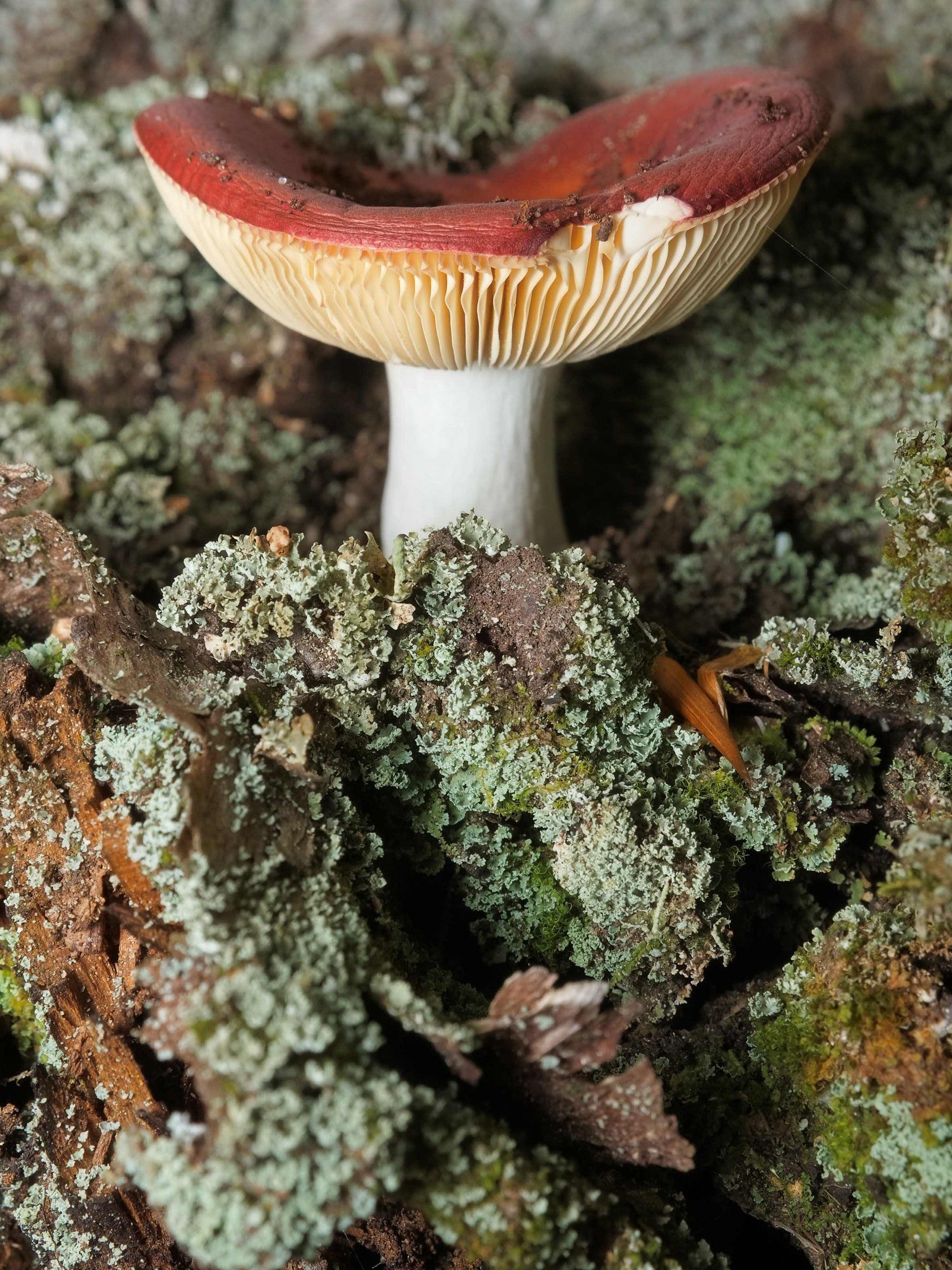
This photo is from a few weeks back. Some species in the Russula genus.

Location: Midwest USA
38


By twisting the dials on key neurotransmitter systems in our brains, psychoactive compounds in a few kinds of mushrooms can provoke profound psychedelic experiences. The same compounds also show promise in treating illnesses such as therapy-resistant depression. But researchers don’t fully understand how they work in the brain—and why they evolved in the first place is a deeper mystery.

A new analysis, published on 21 September in Angewandte Chemie International Edition, adds to the confusion by confirming that two distinct genera of psychedelic mushrooms produce the same psychoactive compound, psilocybin, through entirely different chemical pathways. The research details a “completely novel path” to making psilocybin, says Jason Slot, a biochemist at Ohio State University who was not involved with the study. He adds that it could point toward “potentially very useful new enzyme tools for synthetic biology.” But it also underscores the puzzle of why two mushroom lineages would have independently arrived at making the same mind-bending molecule.

Mushrooms in the genus Psilocybe such as P. cubensis are the best-known source of psilocybin. But it’s also found in a few species from other genera, including a subset of fungi from the genus Inocybe commonly known as fiber cap mushrooms. When it binds to receptors for the neurotransmitter serotonin in the brain’s neurons, it triggers potent hallucinogenic experiences, which are central to some Indigenous rites and are cherished by modern recreational users.

Scientists don’t know exactly why psilocybin has this effect, but they have dissected the intricate chemical pathway by which Psilocybe mushrooms enzymatically make the compound. Scientists assumed fiber cap mushrooms made psilocybin with similar substrates and chemical reactions, but they hadn’t tested the idea. “We simply thought the order of biosynthetic events and the intermediates were the same,” says study co-author Dirk Hoffmeister, a biochemist at Friedrich Schiller University Jena. “Frankly, we weren’t really sure what to expect.”

39


I don’t know what it is. I’d never seen a mushroom with all these globs on it before and it caught my eye.

40
 
 
41


Found in Tirol, Austria Some were growing right out of the spruce cones The younger ones have really vibrant red/orange-ish caps and the older ones were still a bit red but way more Brown.

My short search didn't give any results even though i think these ones look very identifiable. (I havent seen many with such a thick stem and red/orange color i havent seen on this kind of mushroom either)

42


I believe this is Galerina marginata. Location: Midwest USA

43
 
 
44
 
 
45


Psilocybin is so nice, mushrooms evolved it twice.

Scientists found that the magic behind so-called “magic mushrooms”—psilocybin, a psychedelic compound—has evolved at least twice in mushrooms, and in very different ways.

Researchers in Germany and Austria examined two different types of magic mushrooms. They showed that while both kinds make psilocybin, the biochemistry each relied on to produce the natural compound were entirely distinct. The findings suggest psilocybin may be an example of convergent evolution, in which two, unrelated forms of life nevertheless evolve to develop similar traits or features.

“Mushrooms have learned twice independently how to make the iconic magic mushroom natural product psilocybin,” the authors wrote in the paper, published last month in the journal Angewandte Chemie International Edition.

46


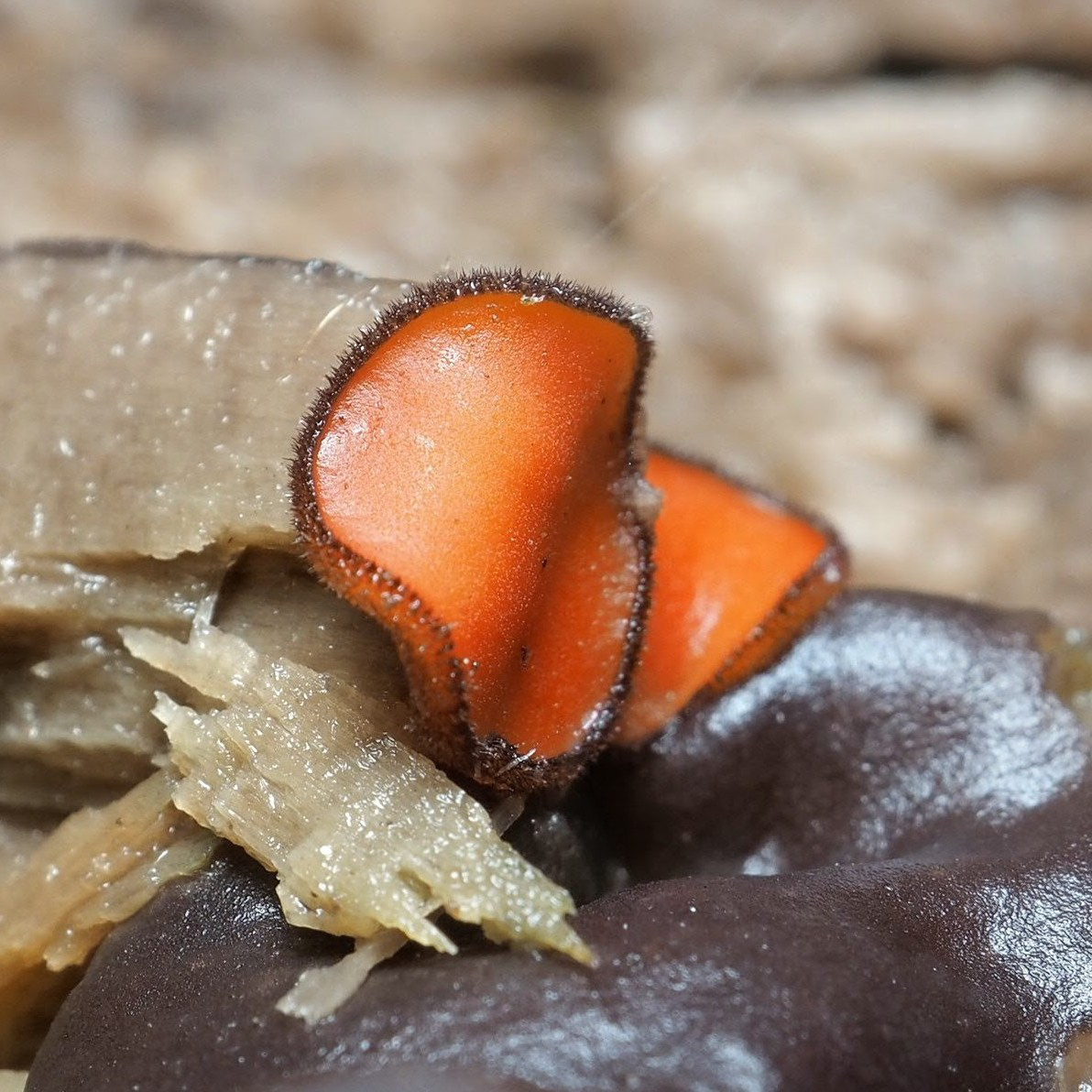
I'm only guessing here, but it looks like the large brown shroom is copper penny fungus. The orange cups are common eyelash, and the slimes could be many things.

47
1
submitted 2 months ago* (last edited 2 months ago) by A_norny_mousse@feddit.org to c/mycology@mander.xyz
 
 
48


I believe this is wolf's milk slime mold, but I'm not certain. I found this yesterday while on a short hike. Quite a beautiful specimen.

49


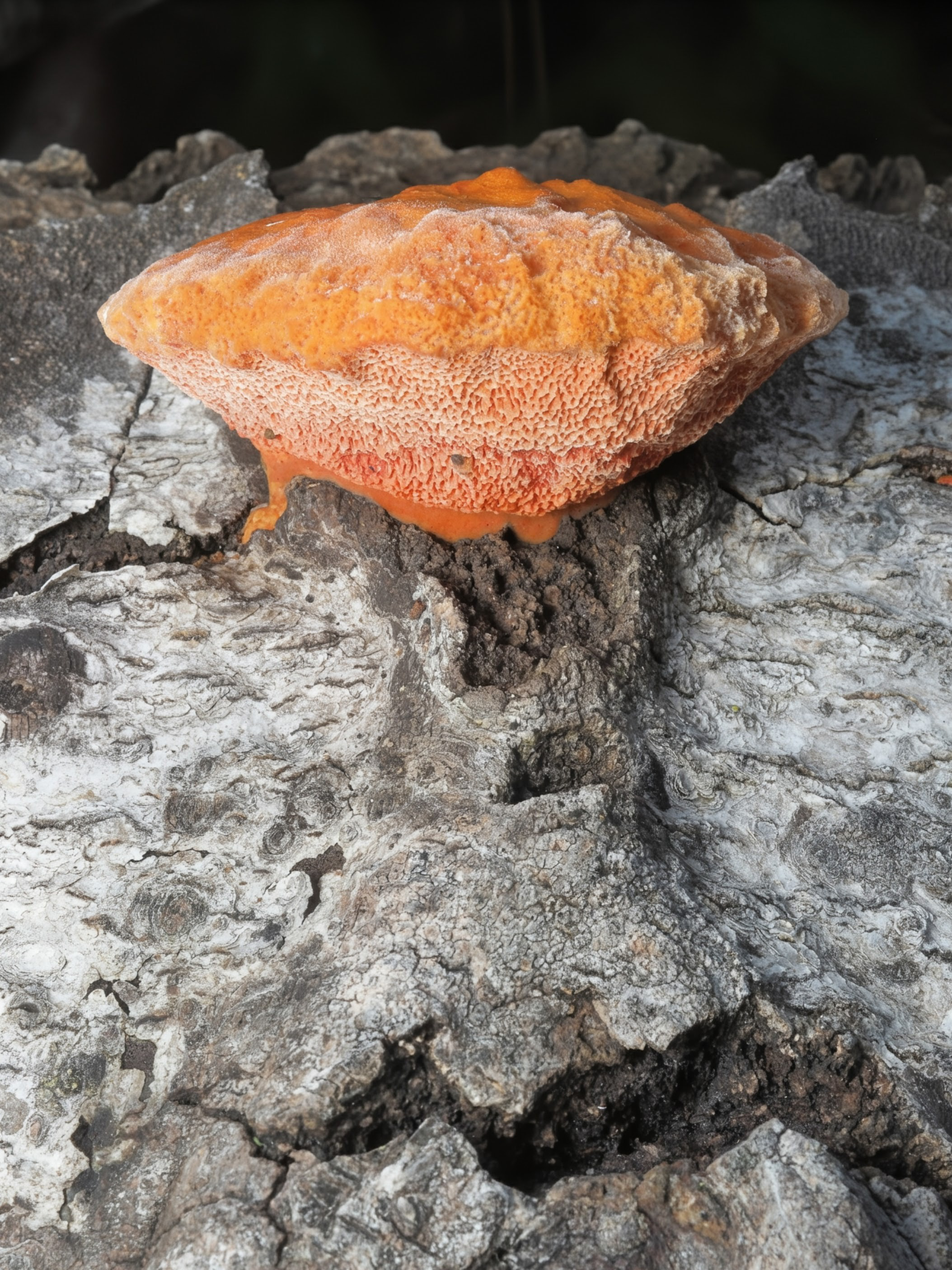
I found this one while on a hike today. Perfectly festive orange polypore. I didn't find too many shrooms today, they may be going dormant for the year.
50


Underside:

underside

These are highly variable, they're often brown on top with a yellow stem. I was doubting my initial ID, thinking they might be Chrysomphalina aurantiaca because the color was so off so I took them to my mycology club and had it confirmed.

The Pacific Northwest Craterellus was just called by the European species name "C. tubaeformis" for a long time but it's not the same species, "C. neotubaeforumis" is a name that's been proposed but not yet formalized.

view more: ‹ prev next ›