fireweed

joined 2 years ago
[–] fireweed@lemmy.world 3 points 1 day ago

I've never done it before because I lack the facilities, however this video goes over the process:

https://youtube.com/watch?v=3wo3bwp5uQA

[–] fireweed@lemmy.world 5 points 2 days ago (2 children)

How often are you watering? Is it by hand or irrigation system? Is there runoff, e.g. from a nearby lawn? If the issue is your soil drains poorly, you might be able to condition it by breaking up any compact soil and amending it with organic matter (and maybe sand). However this is fairly labor intensive and takes time to do properly (and might not fix the issue, depending on the cause). Building raised beds might be a faster and more effective solution.

Peppers have a fairly small root ball, so you could always grow them in grow bags (I'd recommend one 10 gallon bag per plant); it's nearly impossible to over-water grow bags (but on the flip side, it's very easy to under-water them!) Plus growing them in bags makes it super easy to overwinter them, assuming you have access to a garage/basement.

[–] fireweed@lemmy.world 5 points 4 days ago* (last edited 3 days ago)

Sincere question:

Most of the comments here cite reasons for disliking AI that include one or more of the following: environmental degradation, resource consumption, increasing energy/hardware prices, disregarding copyright, disregarding privacy, undermining human artists, mass layoffs, creating a market bubble, throwing education into chaos, monopolization by corporations/billionaires, AI hallucinations/inaccuracy, a product that is overpromising/undelivering, a product that makes generating misinformation easier.

Which of these reasons for disliking AI do you think fall under your assertion of "anti-intellectual technophobia"? They all seem like legitimate, well thought out reasons for disliking something to me, especially when considered together.

[–] fireweed@lemmy.world 2 points 1 week ago (1 children)

I love both dandelion leaf and root teas! The flowers probably make a decent tea too, although I'm yet to try that. Roasted dandelion root + roasted chicory root is a fantastic caffeine-free coffee substitute too.

[–] fireweed@lemmy.world 11 points 1 week ago (7 children)

Some of my personal favorites I grow in my own garden(images taken from the web):

Catnip

Stinging nettle

Calendula

Echinacea

Oregano

Plus there are so many more medicinal plants that I wish to try someday!


This post was inspired by a comment in another thread, and was adapted from a post to c/gardening.

When people think of "medicinal gardens," likely what comes to mind are plants grown specifically for their medicinal properties, such as arnica, feverfew, mugwort, and tulsi: plants that have to be sourced from special seed catalogues and not something you can just pick up at your local nursery. In actuality, tons of vegetable garden staples have medicinal properties, including quite a number that are container-friendly!

For example, basically all culinary herbs have some kind of medicinal use. Probably the best known is sage (its witchy reputation isn't arbitrary!), however many other culinary staples such as mint, oregano, thyme, rosemary, cilantro, and parsley all have their own medical benefits too. Unlike more specialized medicinal plants that can require special processing (e.g. drying the root or creating a tincture), culinary herbs are also super easy to take, either by mixing them into food or brewing a tea (turns out you can just make tea from basically any sturdy edible plant part, including flowers, leaves, stems, roots, and seeds). Probably the best part about using culinary herbs medicinally is that while their medicinal effects may be on the milder side, you're unlikely to over-consume them or experience an interaction or side-effect, unlike other more pharmaceutical-grade plants like licorice root and ashwagandha that require care with use. This general safety, as well as their prevalence, ease of use, and multi-purpose nature, make culinary herbs fantastic entry-level additions to any medicinal garden.

Many popular garden flowers also have medicinal properties, such as jasmine, echinacea, calendula, lavender, and yarrow. It's important to note, however, that many medicinal flowering plants have also been bred for ornamental purposes, and while ornamental varieties probably still retain some medicinal properties, it's best to stick with varieties specifically bred for use as medicine as they tend to be the most potent (and maybe safer? I haven't heard that you shouldn't consume the ornamental varieties, so much as that they're not as effective).

Also worth noting is that for many medicinal plants, the medicinal part isn't necessarily that part that's most commonly consumed. Raspberry (and to a lesser degree strawberry) leaves, for example, are a common treatment for menstrual discomfort, even though the part we usually eat (the fruit) does not share the same medicinal qualities. Flowers, seeds, and roots can also be surprise sources of pharmaceutical effect in plants usually consumed for their other parts.

While there are lots of online resources for learning more about medicinal plants and pharmaceutical gardening, I'd also recommend seeing what print resources are in your local library. Growing and foraging plants with medicinal properties is an ancient human tradition... even non-human animals have been observed seeking out specific plants to alleviate various ailments!

My favorite edible container plants are perennials (as dealing with spent soil from annual plants every season is such a pain), and quite a number of those have medicinal properties. I've had tremendous success growing sage, thyme, oregano, mint/catnip, and calendula in smaller containers, and stinging nettle, mugwort, lavender, and echinacea in larger containers... all of which have medicinal properties of one kind or another. Quite a number of medicinal annuals are container-friendly too, such as tulsi. Some medicinal plants can even thrive indoors, such as aloe vera. Considering that many of these plants do double-duty (e.g. for culinary/pollinator-support/ornamental purposes), there's no reason why even the tiniest of gardens can't have some medicinal plants mixed in!

An obligatory disclaimer: before consuming a plant for medicinal use, you should of course always research the plant for potential interactions or side-effects (many herbs should not be consumed during pregnancy, for example, and some can interact with pharmaceutical drugs, which seems obvious if you think about it). You should also be careful which part of the plant you're consuming: many perfectly edible plants have toxic parts (nightshades like tomatoes and eggplants being a great example).
 

This post was inspired by a comment in another thread.

When people think of "medicinal gardens," likely what comes to mind are plants grown specifically for their medicinal properties, such as arnica, feverfew, mugwort, and tulsi: plants that have to be sourced from special seed catalogues and not something you can just pick up at your local nursery. In actuality, tons of vegetable garden staples have medicinal properties! You likely are already growing a garden pharmacy without even realizing it.

For example, basically all culinary herbs have some kind of medicinal use. Probably the best known is sage (its witchy reputation isn't arbitrary!), however many other culinary staples such as mint, oregano, thyme, rosemary, cilantro, and parsley all have their own medical benefits too. Unlike more specialized medicinal plants that can require special processing (e.g. drying the root or creating a tincture), culinary herbs are also super easy to take, either by mixing them into food or brewing a tea (turns out you can just make tea from basically any sturdy edible plant part, including flowers, leaves, stems, roots, and seeds). Probably the best part about using culinary herbs medicinally is that while their medicinal effects may be on the milder side, you're unlikely to over-consume them or experience an interaction or side-effect, unlike other more pharmaceutical-grade plants like licorice root and ashwagandha that require care with use. This general safety, as well as their prevalence, ease of use, and multi-purpose nature, make culinary herbs fantastic entry-level additions to any medicinal garden.

Many popular garden flowers also have medicinal properties, such as jasmine, echinacea, calendula, lavender, and yarrow. It's important to note, however, that many medicinal flowering plants have also been bred for ornamental purposes, and while ornamental varieties probably still retain some medicinal properties, it's best to stick with varieties specifically bred for use as medicine as they tend to be the most potent (and maybe safer? I haven't heard that you shouldn't consume the ornamental varieties, so much as that they're not as effective).

Also worth noting is that for many medicinal plants, the medicinal part isn't necessarily that part that's most commonly consumed. Raspberry (and to a lesser degree strawberry) leaves, for example, are a common treatment for menstrual discomfort, even though the part we usually eat (the fruit) does not share the same medicinal qualities. Flowers, seeds, and roots can also be surprise sources of pharmaceutical effect in plants usually consumed for their other parts.

While there are lots of online resources for learning more about medicinal plants and pharmaceutical gardening, I'd also recommend seeing what print resources are in your local library. Growing and foraging plants with medicinal properties is an ancient human tradition... even non-human animals have been observed seeking out specific plants to alleviate various ailments!

The next time you're feeling a bit unwell, be it digestive discomfort, menstrual cramps, or just a case of the sniffles, look up your symptom online + "medicinal plants" or "herbs" or similar. You may be surprised to find just the thing is already growing in your backyard!

An obligatory disclaimer: before consuming a plant for medicinal use, you should of course always research the plant for potential interactions or side-effects (many herbs should not be consumed during pregnancy, for example, and some can interact with pharmaceutical drugs, which seems obvious if you think about it). You should also be careful which part of the plant you're consuming: many perfectly edible plants have toxic parts (nightshades like tomatoes and eggplants being a great example).

[–] fireweed@lemmy.world 4 points 1 week ago

It's less that Santa is on strike, and more that his sleigh is quagmired in a foot of melted permafrost


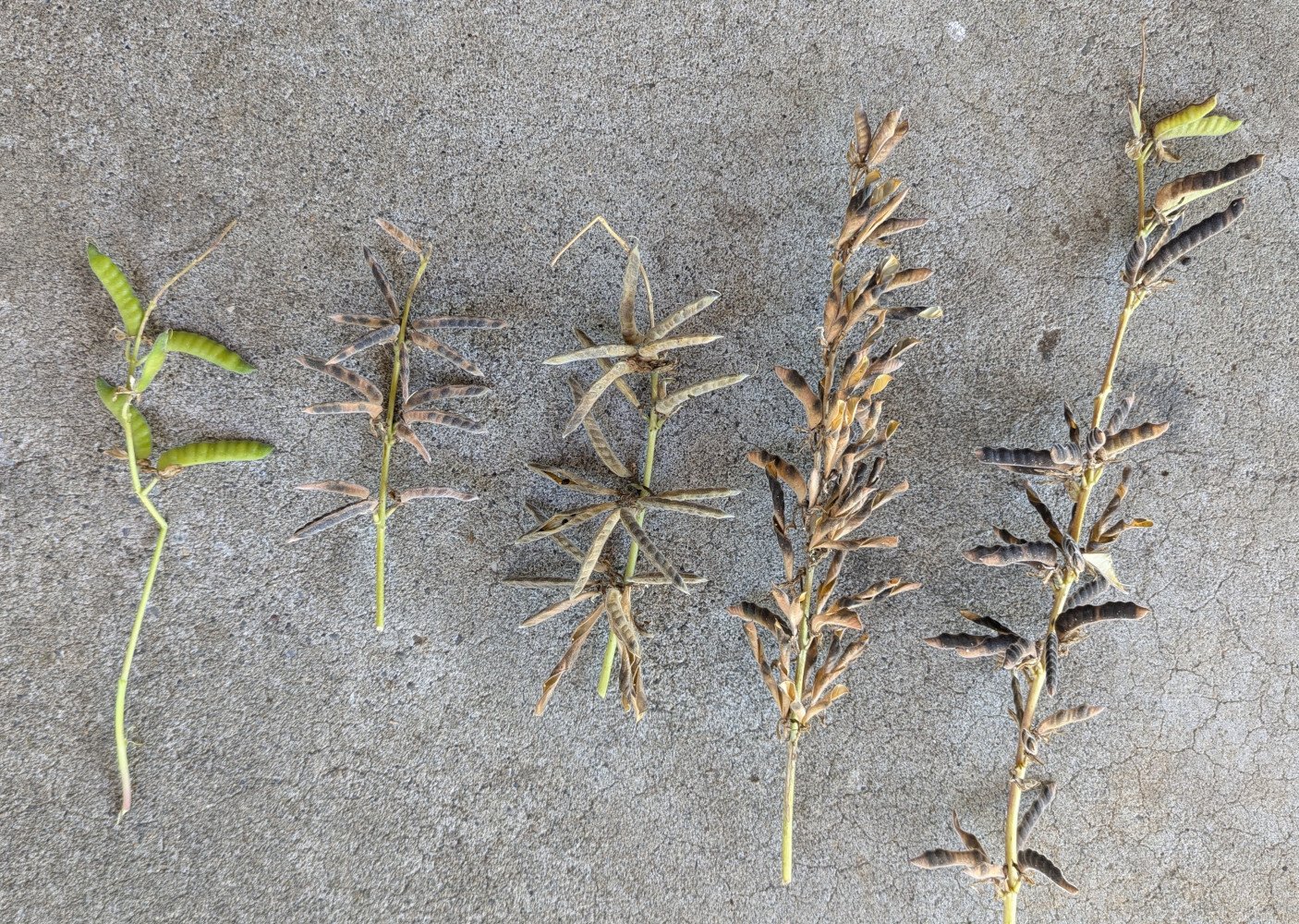
There was a conversation about lupine seed collection in the comment section of a post a little while back, and now that my lupine is going to seed I thought I'd follow up on what that looks like.

From left to right, we have immature seed pods (still green, still developing), maturing seed pods (brown, with black seeds inside), pods just about to pop (you can see them starting to split open with the round black seeds poking through), old pods most of which have popped open and dispelled their seeds, and finally a branch with all four stages present (generally seed pods develop from the bottom up, however this can be affected by variables like sun exposure).

The seed pods are apparently heat-activated; we've been getting a major heat wave here in the Pacific Northwest and the pods have been exploding open like crazy during midday when the sun hits them and the ambient temperature is at its peak. The seeds are propelled out when the pods burst open, and I've witnessed them fly well over ten feet.

If you want to harvest lupine seeds, the key is to grab them when they're mature but not yet expelled; you can do this by harvesting the pods by hand as they mature, but usually I prune the branches off the lupine once the pods on the branch start opening and put the entire branch in a bucket to break open at their leisure. While this pruning is generally unnecessary if you're not interested in seed saving, it does prevent thousands of volunteer lupine from popping up all over the garden (it's nearly impossible to keep all the seeds from spreading so I usually get a few dozen every fall and spring, but it's super easy to remove any that aren't wanted). One year I pruned the spent flowers before seeds could develop, and while that did produce a small second round of blooming I think it overly stressed the plant. Many lupine species are fairly short-lived perennials (with a few annuals sprinkled in), so it may be worth stressing them for more blooms if it's likely to die soon after anyway.

Some general disclaimers about lupine: due to their prolific seed generation and speedy life cycles, lupine are highly invasive outside their native range. There are also many species of lupine out there, so before planting make sure to source species from your area! There are some more "domesticated" ornamental species out there, but I'd really recommend sourcing a native variety if you can. They are really wonderful plants that require little care once established, have unique and showy foliage, and native bumblebees absolutely adore their gorgeous flowers.

I hope this was informative!


Disclaimer: data only available for the lower 48 United States, although Southern Canada and Northern Mexico should be able to extrapolate

The Xerces Society is an insect conservation nonprofit organization based in Portland, Oregon. They engage in a variety of work to protect native insects, including publishing resources for the general public.

One such resource are their Native Plants for Pollinators and Beneficial Insects guides, which are curated illustrated lists of plants broken down by geographic region. The lists include basic growing conditions info for each species, as well as some info on how the plants benefit insects. They even have separate lists specifically for supporting the endangered monarch butterfly.

If you're a native plant fanatic like me you can cross-reference their lists with the USDA Plants Database (I wrote about that other great resource in this post here) to verify if the Xerces-recommended plants are native to your county, however the Xerces lists are broken up into relatively small regions so you're unlikely to cause damage or introduce problematic species even if it's not technically native to your specific county.

I hope y'all find these lists as useful/inspiring as I have!


Identifying what plants are actually native to your area can be surprisingly tricky. A lot of info out there is state- (or even less helpfully, region-) specific, but if you live in a large and/or geographically diverse state what's native in one corner may be completely foreign in another. There's also a lot of information out there that's too vague or straight-up incorrect, especially for any plant with numerous common names or multiple sub-species.

Enter the USDA Plants Database! While far from perfect, it is hands-down the best tool I have encountered for verifying what plants are native to an area of the US down to the county level.

I often use the database to cross-reference plant guides and recommendations, such as relating to pollinator-friendly gardening. For instance, you would be really surprised how often plants that are not actually native to your area will slip into "native" seed mixes! On the flip side there are also lots of plants that are native to large regions that are often overlooked because they're not a regional specialty, such as selfheal (Prunella vulgaris), which is native to much of the northern hemisphere.

Many of the more common plants, such as selfheal, have two-page writeups in the Plants Database that have an admittedly agricultural bent to them, but can still be quite helpful for home gardeners too (continuing with the previous example, here's selfheal's). I highly recommend giving them a read, especially if you want to grow your plants from seed or propagate them.

Unfortunately the database is not fully populated (some entries are more info-rich than others), and things can get a little confusing when all you have is the common or even scientific name for a plant that has many subspecies (or even worse, if the scientific name has changed at some point), but that's more an issue with taxonomy than the database. If in doubt, checking the images tab can be quite helpful in verifying you have the correct plant entry. Still, I have yet to find any source as comprehensive and accurate as this one.