Privacy

4353 readers
159 users here now

Welcome! This is a community for all those who are interested in protecting their privacy.

Rules

PS: Don't be a smartass and try to game the system, we'll know if you're breaking the rules when we see it!

  1. Be civil and no prejudice
  2. Don't promote big-tech software
  3. No apathy and defeatism for privacy (i.e. "They already have my data, why bother?")
  4. No reposting of news that was already posted
  5. No crypto, blockchain, NFTs
  6. No Xitter links (if absolutely necessary, use xcancel)

Related communities:

Some of these are only vaguely related, but great communities.

founded 1 year ago
MODERATORS
1


cross-posted from: https://lemmy.dbzer0.com/post/36880616

Help Combat Internet Censorship by Running a Snowflake Proxy (Browser or Android)

Internet censorship remains a critical threat to free expression and access to information worldwide. In regions like Iran, Russia, and Belarus, journalists, activists, and ordinary citizens face severe restrictions when trying to communicate or access uncensored news. You can support their efforts by operating a Snowflake proxy—a simple, low-impact way to contribute to a freer internet. No technical expertise is required. Here’s how it works:


What Is Snowflake?

Snowflake is a privacy tool integrated with the Tor network. By running a Snowflake proxy, you temporarily route internet traffic for users in censored regions, allowing them to bypass government or institutional blocks. Unlike traditional Tor relays, Snowflake requires minimal bandwidth, no configuration, and no ongoing maintenance. Your device acts as a temporary bridge, not a permanent node, ensuring both safety and ease of use.


Is This Safe for Me?

Short answer: Yes.

Long answer: pobably. Here is why:

  • Your IP address is not exposed to the websites they access. So, you don't have to worry about what they are doing either. You are not an exit node.
  • No activity logs. Snowflake cannot monitor or record what users do through your connection. The only stored information is how many people have connected to your bridge. Check docs for further info on this.
  • Low resource usage. The data consumed is comparable to background app activity—far less than streaming video or music.
  • No direct access to your system
  • No storage of sensitive data. Snowflake proxies do not store any sensitive data, such as IP addresses or browsing history, on your system.
  • Encrypted communication. All communication between the Snowflake proxy and the Tor network is encrypted, making it difficult for attackers to intercept or manipulate data.

You are not hosting a VPN or a full Tor relay. Your role is limited to facilitating encrypted connections, similar to relaying a sealed envelope.

Your IP address is exposed to the user (in a P2P-like connection). Be mindful that your ISP could also potentially see the WebRTC traffic and the connections being made to it (but not the contents), so be mindful of your threat model.

For most users, it is generally safe to run Snowflake proxies. Theoretically, your ISP will be able to know that there are connections being made there, but to them it will look like you're calling someone on, say, Zoom.

Historically, as far as we know, there haven't been any cases of people getting in legal trouble for running entry relays, middle relays, or bridges. There have a been a few cases of people running exit nodes and getting in trouble with law enforcement agencies, but none of them have been arrested or prosecuted as far as I know it. If you are aware of any cases, let me know so I can update this post.

Do not hesitate to check Snowflake's official documentation for further reference and to make informed decisions.


How to Set Up a Snowflake Proxy

Option 1: Browser Extension (Brave, Firefox, or Chrome)

  1. Install the Snowflake extension.
  2. Click the Snowflake icon in your browser toolbar and toggle "Enable Snowflake."
  3. Keep the browser open. That’s all.

Note: Brave users can enable Snowflake directly in settings. Navigate to brave://settings/privacy and activate the option under "Privacy and security."


Option 2: Android Devices via Orbot

  1. Download Orbot (Tor’s official Android app).
  2. Open the app’s menu, select "Snowflake Proxy," and toggle it on.
  3. For continuous operation, keep your device charged and connected to Wi-Fi.

Your device will now contribute as a proxy whenever the app is active.


Addressing Common Concerns

  • Battery drain: Negligible. Snowflake consumes fewer resources than typical social media or messaging apps.
  • Data usage: Most users report under 1 GB per month. Adjust data limits in Orbot’s settings or restrict operation to Wi-Fi if necessary.

Why Your Participation Matters

Censorship mechanisms grow more sophisticated every year, but tools like Snowflake empower ordinary users to counteract them. Each proxy strengthens the Tor network’s resilience, making it harder for authoritarian regimes to isolate their populations. By donating a small amount of bandwidth, you provide someone with a critical connection to uncensored information, education, and global dialogue.

Recent surges in demand—particularly in Russia—highlight the urgent need for more proxies. Your contribution, however small, has an impact.

By participating, you become part of a global effort to defend digital rights and counter censorship. Please, also be mindful of your threat mode and understand the potential risks (though very little for most people). Check Snowflake's official documentation for further reference and don't make any decisions based on this post before taking your time to read through it.

Please share this post to raise awareness. The more proxies, the stronger the network.

– llama

2
3
submitted 10 months ago* (last edited 10 months ago) by shaytan@lemmy.dbzer0.com to c/privacy@lemmy.dbzer0.com


It's hard to make the full switch towards a more private life, but switching your mail already fixes a big underlying issue: that being, Google or other companies having access to all your emails. So, I'll cover the basics of making your online mailing more private.

Switching Mail Providers:

Your email is a big part of your online footprint and helps you keep track of your online identity. So, in order to keep that to yourself, I encourage leaving services like:

"Gmail" or "Outlook",

for others like:

"ProtonMail" or "Tutanota".

This is already a big step towards keeping all your emails private and safe. Both of these are free and respect your privacy on their free tier, but expand in features with paid plans. This takes time, as you have to switch your email on most accounts to this new email.

For the best privacy, you should delete most accounts and create new ones with this new email or with aliases. Some people, like myself, prefer to have multiple emails over aliases. For example:

  • "something.banking11231@provider.me" -> For banking and finance
  • "something.social12312@provider.me" -> For social media
  • "general.use@provider.me" -> For casual and responsible internet use
  • "something.trash21412@provider.me" -> For crappy websites or similar uses

(Self-hosting your own mail domain is possible, but it’s a harder process, and custom domains are not always accepted or reliable.)

(You should keep your old email for a year or so to make sure no important service was left behind locked to that email. Once that's done, you can delete the account.)

Tips:

If you can, you should try expanding your protocol with this:

  • Adding 2FA to any online website, especially email. I use ~~"Authy" ~~for this. -> Better use Aegis, good app!

  • Switching your browser to something like "Librewolf".

  • Switching to a password manager like "Proton Pass" or "1Password".

  • Encourage your close family to do the same once you're comfortable with the process.

  • Switch social media to private alternatives.

  • If you take any efforts to switch browser or install Aegis, try to use "F-droid", or even better, "Droidify". These being a FOSS app store, and a good Material alternative frontend. For apps not in here, consider "Aurora store", a more private **"Play store" **alternative

This is about it for me, quick posts from class, feel free to add into this topic bellow.

Edit:

Important additions after reading the comments:

  • Proton is a bit disencouraged by some for some political views published by the CEO under proton's account and image. They backed down, and I believe it isn't something too bad as for users to leave such a good privacy oriented suite of apps. I encourage anyone who cares about this topic to research before making the switch.

  • Mail is not 100% private with any option, and shouldn't be used for highly sensitive information. For that use end to end encrypted apps well respected, like "signal". Still is best to just don't send very sensitive information online.

  • As a comment pointed, for a mail to be as private as possible, both the sender and reciever should have a private mail, otherwise you can be private but the other person would still be having your mail conversations stored under "gmail" or similar.

Sorry if this post didn't give the best newbie advice, I tried to track back some of my old knowledge, but I'll take more time to research the next time. Take care and stay private!

3
4
5
6
7
8


Alright, I needed a cloud service that had a large free plan for me to use until my financial situation got better. The issue is:

  • Filen doesn't allow you to send links until you have a paid plan;

  • Nextcloud is... confusing. I can't find a way to do accounts on most clients and stuff.

Can someone give me some hints on Nextcloud or suggest me any other good cloud services?

9


Please suggest a Private YouTube client for Android. If available on Fdroid, even better.

10


cross-posted from: https://lemmy.world/post/40055131

OG title: We need to talk... about the Proton ecosystem

Ecosystem is a trap. It lures you in with the promise of convenience, only to lock you inside a walled garden. Like Google and Apple. They start with a good product, but then force you to use the whole suite to get the full experience. This is dangerous.

Ecosystems are concentrating all of your data and your digital life in the hands of a single entity. An entity that grows so large and powerful that it will start making compromises against your rights only to find more ways to profit or protect their business. The larger the ecosystem, the bigger data harvester it becomes. It becomes a bigger target for hackers and the more products it offers the more data it has to give to the surveillance state.

We know that the big tech does this, because their only moral value is the shareholder value. [4] But when a private company starts quacking like a duck in the steps of the big tech, it should worry us the same way. That company is Proton. The maker of the most renowned privacy products that have always been meant as ethical alternatives to the big tech.

Today, Proton resembles more and more the ecosystems of Google and Apple than it does its noble origins of fighting the big tech. This is a problem. It’s a problem for your privacy and it’s a problem for the whole community. But you probably never of heard of this perspective, because none of this is talked about enough. There is a reason for this.

You see, most content on Proton you’ll find, is coming from sources that are sponsored or affiliated with Proton. And I know how lucrative Proton’s deals are, because Proton even tried to pay me. Of course, I refused their offer, because taking their money would incentivize me not to recommend against Proton products. I am uniquely positioned to give you a nuanced critique of Proton and how to solve this problem.


Some good points to be said. I find the overall argument a bit weak as it is mainly one of user erorr of sorts. Btw THO has some pretty good back log of videos on privacy; check out their stuff on burners phones and anonymizing yourself at a protest.

11


cross-posted from: https://lemmy.world/post/40009551

https://www.404media.co/man-charged-for-wiping-phone-before-cbp-could-search-it/

A man in Atlanta has been arrested and charged for allegedly deleting data from a Google Pixel phone before a member of a secretive Customs and Border Protection (CBP) unit was able to search it, according to court records and social media posts reviewed by 404 Media. The man, Samuel Tunick, is described as a local Atlanta activist in Instagram and other posts discussing the case. The exact circumstances around the search—such as why CBP wanted to search the phone in the first place—are not known. But it is uncommon to see someone charged specifically for wiping a phone, a feature that is easily accessible in some privacy and security-focused devices. 💡 Do you know anything else about this case? I would love to hear from you. Using a non-work device, you can message me securely on Signal at joseph.404 or send me an email at joseph@404media.co. The indictment says on January 24, Tunick “did knowingly destroy, damage, waste, dispose of, and otherwise take any action to delete the digital contents of a Google Pixel cellular phone, for the purpose of preventing and impairing the Government’s lawful authority to take said property into its custody and control.” The indictment itself was filed in mid-November. Tunick was arrested earlier this month, according to a post on a crowd-funding site and court records. “Samuel Tunick, an Atlanta-based activist, Oberlin graduate, and beloved musician, was arrested by the DHS and FBI yesterday around 6pm EST. Tunick's friends describe him as an approachable, empathetic person who is always finding ways to improve the lives of the people around him,” the site says. Various activists have since shared news of Tunick’s arrest on social media.

The indictment says the phone search was supposed to be performed by a supervisory officer from a CBP Tactical Terrorism Response Team. The American Civil Liberties Union (ACLU) wrote in 2023 these are “highly secretive units deployed at U.S. ports of entry, which target, detain, search, and interrogate innocent travelers.” “These units, which may target travelers on the basis of officer ‘instincts.’ raise the risk that CBP is engaging in unlawful profiling or interfering with the First Amendment-protected activity of travelers,” the ACLU added. The Intercept previously covered the case of a sculptor and installation artist who was detained at San Francisco International Airport and had his phone searched. The report said Gach did not know why, even years later. Court records show authorities have since released Tunick, and that he is restricted from leaving the Northern District of Georgia as the case continues. The prosecutor listed on the docket did not respond to a request for comment. The docket did not list a lawyer representing Tunick.

12


cross-posted from: https://lemmy.world/post/40010335

In early September, a woman, nine months pregnant, walked into the emergency obstetrics unit of a Colorado hospital. Though the labor and delivery staff caring for her expected her to have a smooth delivery, her case presented complications almost immediately.

The woman, who was born in central Asia, checked into the hospital with a smart watch on her wrist, said two hospital workers who cared for her during her labor, and whom the Guardian is not identifying to avoid exposing their hospital or patients to retaliation.

The device was not an ordinary smart watch made by Apple or Samsung, but a special type that US Immigration and Custom Enforcement (ICE) had mandated the woman wear at all times, allowing the agency to track her. The device was beeping when she entered the hospital, indicating she needed to charge it, and she worried that if the battery died, ICE agents would think she was trying to disappear, the hospital workers recalled. She told them that, just days earlier, she had been put on a deportation flight to Mexico, but the pilot refused to let her fly because she was so close to giving birth.

The woman’s fear only grew from there, according to the hospital workers. Her delivery wasn’t progressing the way the care team hoped, and she needed a C-section, a procedure that requires doctors to use a cauterizing tool to minimize bleeding. To prevent possible burning and electrocution, patients are instructed to take off all jewelry or metals before the surgery. The mandatory watch had no way to be easily removed, nor was information about whether it would be safe to wear during the procedure readily available. Hospital staff didn’t know how to contact ICE to ask what to do. When hospital staff told the woman they might have to cut the smart watch off, she panicked, the workers said.

Staff eventually did remove the device, and ICE agents did not show up at the hospital during the delivery. The nurses said they do not know what happened to the woman after she left the hospital with her baby.

The woman was one of three pregnant patients wearing a location-tracking smart watch whom these two workers encountered in their ER in the last few months, they said. BI Inc and alternative to detention

The watches are built and operated by BI Inc, a company specializing in monitoring tech that runs the US government’s largest immigrant surveillance operation. The program, Alternative to Detention (ATD), allows select immigrants to await their day in court at home rather than in detention, provided they subscribe to intense monitoring.

When immigrants are enrolled in ATD, they are assigned one or more types of supervision. Some have to wear an ankle monitor, some a smart watch. Some are required to complete regularly scheduled facial recognition scans at their home using a BI Inc app, others are mandated to go into a BI Inc or ICE office for regular in-person check-ins.

The smart watch, officially called the VeriWatch, was introduced two years ago by BI Inc. It was first piloted under the Biden administration and framed as a more discrete alternative to the less digitally equipped ankle monitor, which BI also manufactures and supplies to ICE. As the Guardian previously reported, immigrants wearing the ankle monitors have complained about the stigma that comes with wearing the conspicuous device as well as physical pain caused by the monitors, including electric shocks and cuts from devices that are strapped on too tightly.

Nearly 200,000 people are currently enrolled in the program, and many of them have become increasingly fearful of being considered out of compliance as the Trump administration works to deport immigrants en masse. There have been several cases of people in the program showing up to a mandated, regular in-person check-in with immigration officials, believing they will continue in the ATD program, only to be detained.

All three women encountered by the Colorado hospital staff were reluctant to take their monitors off, fearing that doing so would trigger an alert to ICE or BI Inc, the staff said, even if removing the device was deemed medically necessary.

One of the women went into the ER for a C-section and was diagnosed with preeclampsia, a complication that can cause significant swelling. Staff were worried her smartwatch would cut off her circulation.

“She was in tears about it. She had this deep fear that ICE was going to come to the hospital and take her baby,” one of the staff said. The hospital worker’s shift ended before the patient underwent the C-section. They said they do not know whether the staff who took over the patient’s case convinced her to cut off the watch.

The confusion and fear surrounding the wrist monitor caused delays in the hospital’s ability to provide adequate and necessary care for these women, the workers said, though the patients delivered their babies safely.

“Waiting and trying to figure these things out even when things are not super emergent can cause something emergent to happen,” one of the workers said. “Sometimes in birth, doing a C-section 20 minutes before something bad happens can prevent it.”

The workers pointed out that when they treat patients wearing a monitor issued by the state Department of Corrections, there is a protocol in place to remove it ahead of medical procedures. Trump’s chaotic crackdown

Hospital staff from across the US who spoke to the Guardian say the confusion brought on by monitoring devices is just one of several ways Donald Trump’s immigration crackdown is affecting medical care, and comes as immigrant patients are increasingly fearful of seeking out treatment.

One of the staff at the Colorado hospital said she’s had at leastthree pregnant patients show up for their first-ever prenatal appointment at anytime between 34 and 38 weeks – well into their third trimester and long after pregnant women are recommended to begin going to consistent doctor appointments.

In California, hospital workers have also noticed a drop this year in immigrants not just seeking emergency care but also showing up for regular doctor visits or vaccinations, according to the California Nurses Association president, Sandy Reding.

“Obviously it has a cascading effect,” Reding said. “If you don’t see your doctor regularly then the outcomes are worse and you wait until you have a crisis to go to the ER.”

In Chicago, CommunityHealth, one of the largest volunteer-based health centers in the country, documented an overall drop in visits per patient and patient retention between 2024 and 2025 due to immigration enforcement activity in the city. In June, the organization observed a 30% dip in patients showing up for their appointments and around a 40% drop in patients picking up their medication since Trump took office.

Neither ICE nor BI Inc responded to requests for comment. ICE previously told the Guardian that there is no evidence the ankle monitors have caused physical harm and that the ATD program was effective at increasing court appearance rates among immigrants facing removal. skip past newsletter promotion

after newsletter promotion Vague procedures, concrete problems

The lack of procedure to have ankle or wrist monitors removed in medical emergencies has affected more than just pregnant women. In one July 2025 case, ICE responded to a man’s request to remove his ankle monitor because of a medical issue by detaining him, according to a court petition filed on his behalf by immigrant rights group Amica, which the Guardian reviewed.

The man came to the US from Bangladesh to seek political asylum, and was told he had to wear an ankle monitor while his claim was pending. Suffering from nerve damage in one leg, he obtained a note from a medical clinic requesting the monitor be removed. His lawyer sent the note to the ICE officer on the case but never heard back. During his first check-in at the BI offices, the man brought the medical note to the BI Inc employee assigned to the case, who suggested the man might be able to move the ankle monitor to his other leg. But after the man’s lawyer called ICE to inquire about moving the ankle monitor, the BI case manager informed the man that ICE officers were coming to the BI office to speak with him. They arrested and detained the man, according to the petition.

“He explained that he was just asking for the ankle monitor to be put on the other leg, and the officer told him it was ‘too late’,” the petition reads.

In 2009, ICE discontinued the use of ankle monitors for pregnant women and people whose medical conditions made it “inappropriate” to wear them. But former BI Inc staff as well as immigrants rights groups Amica and American Friends Services Committee said they are concerned that these exceptions are not always enforced. That exception also doesn’t apply to smart watches, a June 2025 ICE memo shows.

The ICE memo instructs agency staffers to put ankle monitors on anyone enrolled in ATD. Dawnisha M Helland, an ICE acting assistant director in the management of non-detained immigrants, wrote that the only group who would not be given ankle monitors were pregnant women. Instead, pregnant women in ATD would wear the smart watch.

Though it resembles a typical consumer smart watch, the VeriWatch is not less restrictive than the ankle monitor. Like the ankle monitor, the wrist watch can’t be removed by the person wearing it. ICE had the option of using a removable version of the watch, according to a 2023 request for information DHS published. The agency chose a different direction; it currently only uses a watch that cannot be removed except by an ICE or authorized BI agent, according to two former DHS officials and two former BI employees.

Immigrants in the program are not told what to do with their ankle or wrist monitors in case of medical emergencies, and BI staff were not authorized to approve the removal of the monitors without first speaking to ICE, the two former BI Inc. staff recalled.

There’s not always time in emergency cases to wait for approval from ICE to cut off the monitors, the Colorado hospital workers said. One of the Colorado staff said they’re deeply concerned about how this unremovable watch will continue to impact vulnerable pregnant women.

“They’re looking at people who literally can’t speak up, who have no legal resources, who are not American citizens, and are pregnant. They’re asking themselves what they can get away with in terms of violating civil liberties for these patients,” the employee said. “That’s the true pilot program: How far can they overreach?” Internal alarm

Healthcare workers are not the only ones sounding the alarm over surveillance’s interference with medical care. Two former Department of Homeland Security officials told the Guardian that the lack of protocols for immigrants surveilled under ATD with exigent medical issues is a symptom of a larger issue with the way BI Inc and ICE run the program. As the Guardian previously reported, immigrants surveilled under ATD and BI Inc employees alike have long complained that the program is highly discretionary. They said that many of the decisions about how, why or how long a given person was mandated to wear an ankle monitor or a smart watch were left to individual case workers.

BI Inc, which started off as a cattle monitoring company, and its parent company the Geo Group, which develops detention centers, private prisons, and rehabilitation facilities, have been given the exclusive DHS contract to operate all aspects of the ATD program since its inception in 2004. That’s despite previous attempts by ICE leadership under Joe Biden’s administration to break the contract up into three parts rather than awarding the entirety of the contract to Geo Group, a company that has served as a landing spot for former ICE and DHS officials.

At its peak, BI Inc monitored approximately 370,000 immigrants under the Biden administration as part of a policy that put every head of household crossing the border on ATD. The tally decreased in 2025 to about 180,000 people, due in part to high costs of putting so many people on ATD, former DHS officials said. As Trump’s second administration supercharged immigration enforcement and greenlit a $150bn surge in funding for ICE, though, Geo Group executives expressed confidence they could reach the same height by the second half of 2025. The goal, the executives have said, is to monitor all 7.5 million people listed on the federal government’s non-detained docket, the list of non-citizens who have not been detained but are subject to removal.

However, the Trump administration has focused on deportation and detention rather than monitoring, and the number of immigrants enrolled in ATD and wearing ankle monitors or other GPS tracking devices has hovered around 180,000, much to the dismay of Geo Group executives.

“Now the count has been fairly stable, which is a little disappointing, obviously,” George Zoley, the GEO Group founder and executive chairman of the board, said during the company’s November earnings call.

ICE awarded another two-year-contract to BI Inc to manage ATD in September. Executives have said they’re pleased that the agency is prioritizing using the company’s more expensive ankle monitors on those immigrants already in ATD rather than the more cost-effective tools like the company’s facial recognition app, Smart Link.

Under the Biden administration, several departments within DHS attempted to address the lack of consistent policy around how ICE should run ATD. In December 2022, DHS hosted 100 non-governmental organizations as well as members of academia and private industry to discuss how to bring more “uniform standards to govern” ATD. That two year effort to draft guidelines in a document, initially titled Non-Detained Management Standards, was ultimately scuttled by ICE and BI, said Scott Shuchart, a former assistant director for regulatory affairs and police at ICE under the Biden administration. Another former DHS official confirmed his account. The draft standards were never made public.

“The program is really structured for the benefit of BI and not for the benefit of the non-citizens who were going to be managed through it,” said Shuchart. “Therefore ERO [ICE’s enforcement and removal arm] was extremely resistant to bring rationalization and consistent policy into it.”

13


cross-posted from: https://lemmy.world/post/40088092

Not appreciated, I'm removing it.

14


I am looking for a free, privacy‑centric app for endless doom‑scrolling that serves as an alternative to Instagram, TikTok, and Facebook—without the need for social connections, or chatting.

15
 
 
16
17


I have a messy situation here. All the password managers I have used so far don't work smoothly on my device. So far, I have used 3 password managers. ProtonPass, BitWarden & KeePassDX. I'm on a Samsung device btw. None worked good for me to be honest. In case of Proton Pass, passwords don't show up while I'm on a signup or login page for me even when I have literally saved them! It's pretty frustrating. They show up like less than 20% of the time. And in case of Bitwarden, I installed it from Aurora Store and the app wasn't even opening or working properly. I tapped on the buttons and it didn't react to my taps at all. So I deleted it and reinstalled from F-Droid through the Bitwarden F-Droid Repo. Then it worked the first time and only that time. I signed in to my account in Bitwarden. And also saved a few passwords. I closed the app. I went to some signup and login pages on my browser, but autofill didn't show up in this case either. Then I opened the app again. I entered my Master Password. But the Unlock button wasn't responding even when I tapped on it again and again. In case of KeePassDX, the app won't respond to my taps at many times and again, passwords don't show up while I'm on a signup or login page. And I have installed another one yesterday, it was called 1Password. I don't really consider that I have actually even "used" it. I only just installed it from Aurora Store and opened the app. But surprisingly, this app responded to my taps well and was working pretty smoothly (even more than Bitwarden did the first time). But then came a red flag, it offers only a 14 day trial and nothing else for free. And then I deleted the app.

I'm actually looking for a password manager that is free, private and secure (basically a service I can trust my data with), and works smoothly on my Samsung device. I want you password managers with these 3 qualities. So, please suggest password managers. I'll probably check and test a few more password managers, even I still don't find one, I'm gonna stick with Proton Pass which may not work completely smoothly and also frustrates me at times because I have to manually open the app and copy the passwords to log in or sign in to sites but still it has worked the best for me so far.

Note: I forgot to add this but I accidentally once deleted Google Play Services on this device before. So this is a fixed device from a local shop in my area. So this might be the reason why. But I'm still looking to try more options on my device. If those still don't work, as I said, I'll stick with Proton Pass

New update in case of Proton Pass: I updated my Proton Pass recently and have noticed that it has gotten pretty good at autofilling. The option to autofill now shows up 80-90% of the time.

18


cross-posted from: https://hexbear.net/post/6941726

cross-posted from: https://news.abolish.capital/post/11686

Highly invasive spyware from consortium led by a former senior Israeli intelligence official and sanctioned by the US government is still being used to target people in multiple countries, a joint investigation published Thursday revealed.

Inside Story in Greece, Haaretz in Israel, Swiss-based WAV Research Collective, and Amnesty International collaborated on the investigation into Intellexa Consortium, maker of Predator commercial spyware. The "Intellexa Leaks" show that clients in Pakistan—and likely also in other countries—are using Predator to spy on people, including a featured Pakistani human rights lawyer.

“This investigation provides one of the clearest and most damning views yet into Intellexa’s internal operations and technology," said Amnesty International Security Lab technologist Jurre van Bergen.

🚨Intellexa Leaks:"Among the most startling findings is evidence that—at the time of the leaked training videos—Intellexa retained the capability to remotely access Predator customer systems, even those physically located on the premises of its govt customers."securitylab.amnesty.org/latest/2025/...

[image or embed]
— Vas Panagiotopoulos (@vaspanagiotopoulos.com) December 3, 2025 at 9:07 PM

Predator works by sending malicious links to a targeted phone or other hardware. When the victim clicks the link, the spyware infects and provide access to the targeted device, including its encrypted instant messages on applications such as Signal and WhatsApp, as well as stored passwords, emails, contact lists, call logs, microphones, audio recordings, and more. The spyware then uploads gleaned data to a Predator back-end server.

The new investigation also revealed that in addition to the aforementioned "one-click" attacks, Intellexa has developed "zero-click" capabilities in which devices are infected via malicious advertising.

In March 2024, the US Treasury Department sanctioned two people and five entities associated with Intellexa for their alleged role "in developing, operating, and distributing commercial spyware technology used to target Americans, including US government officials, journalists, and policy experts."

"The proliferation of commercial spyware poses distinct and growing security risks to the United States and has been misused by foreign actors to enable human rights abuses and the targeting of dissidents around the world for repression and reprisal," the department said at the time.

Those sanctioned include Intellexa, its founder Tal Jonathan Dilian—a former chief commander of the Israel Defense Forces' top-secret Technological Unit—his wife and business partner Sara Aleksandra Fayssal Hamou; and three companies within the Intellexa Consortium based in North Macedonia, Hungary, and Ireland.

In September 2024, Treasury sanctioned five more people and one more entity associated with the Intellexa Consortium, including Felix Bitzios, owner of an Intellexa consortium company accused of selling Predator to an unnamed foreign government, for alleged activities likely posing "a significant threat to the national security, foreign policy, or economic health or financial stability of the United States."

The Intellexa Leaks reveal that new consortium employees were trained using a video demonstrating Predator capabilities on live clients. raising serious questions regarding clients' understanding of or consent to such access.

"The fact that, at least in some cases, Intellexa appears to have retained the capability to remotely access Predator customer logs—allowing company staff to see details of surveillance operations and targeted individuals raises questions about its own human rights due diligence processes," said van Bergen.

"If a mercenary spyware company is found to be directly involved in the operation of its product, then by human rights standards, it could potentially leave them open to claims of liability in cases of misuse and if any human rights abuses are caused by the use of spyware," he added.

Dilian, Hamou, Bitzios, and Giannis Lavranos—whose company Krikel purchased Predator spyware—are currently on trial in Greece for allegedly violating the privacy of Greek journalist Thanasis Koukakis and Artemis Seaford, a Greek-American woman who worked for tech giant Meta. Dilian denies any wrongdoing or involvement in the case.

Earlier this week, former Intellexa pre-sale engineer Panagiotis Koutsios testified about traveling to countries including Colombia, Kazakhstan, Kenya, Mexico, Mongolia, the United Kingdom, and Uzbekistan, where he pitched Predator to public, intelligence, and state security agencies.

The new joint investigation follows Amnesty International's "Predator Files," a 2023 report detailing "how a suite of highly invasive surveillance technologies supplied by the Intellexa alliance is being sold and transferred around the world with impunity."

The Predator case has drawn comparisons with Pegasus, the zero-click spyware made by the Israeli firm NSO Group that has been used by governments, spy agencies, and others to invade the privacy of targeted world leaders, political opponents, dissidents, journalists, and others.


From Common Dreams via This RSS Feed.

19
20


"The EU Council has just greenlit a new "chat control" mandate, effectively signing a blank check for mass surveillance draped in the language of child protection. This time, it drops the explicit obligation for companies to scan all private messages but quietly introduces what opponents describe as an indirect system of pressure. It rewards or penalizes online services depending on whether they agree to carry out 'voluntary' scanning, effectively making intrusive monitoring a business expectation rather than a legal requirement.

This isn't a slippery slope; it's a lubricated slide into a panopticon."

21


Well, I kinda don't have the acess to paid plans YET, I'm struggling really hard to find job offerings currently.

Not a tech savy, btw.

22
23


I was checking my Pi-Hole and noticed a lone spike of 700+ requests coming from my phone (Android 16) this morning. Upon checking the logs, it's all bogus domains corresponding to package names of apps I have previously installed via the Play Store, but never on this phone.
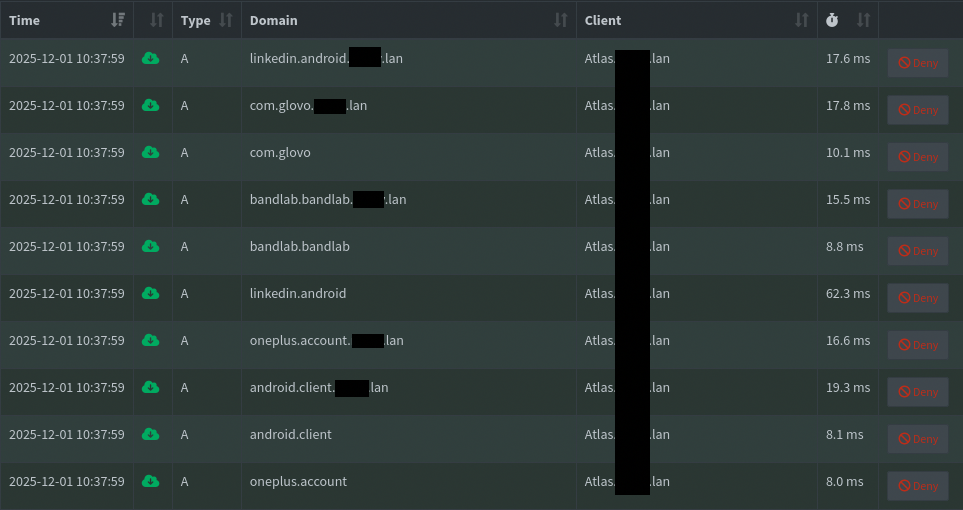
Going further back in the query log, I realized it also includes the package name of an app I developed years ago but never published on the store, nor on this phone. There's also a whole bunch of my browsing history apparently, domains I haven't visited in years - from the age of some of them I'm pretty sure it's Chrome history, as I only used Firefox sync for a brief period and my local history is <1y.
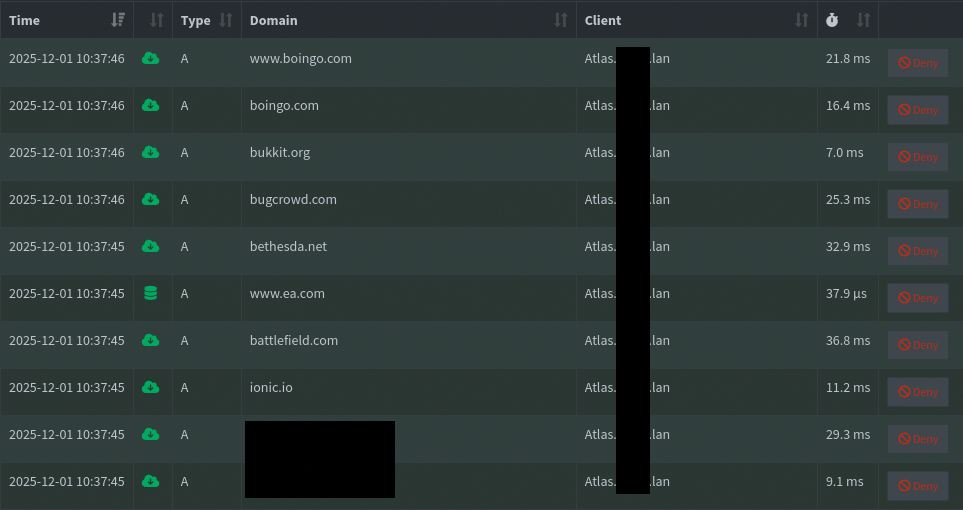
What the actual fuck? This is a Nothing Phone 3a, updated to Android 16 just a couple of days ago.

24
25


Corrected the baitline to be truer to its thesis.

view more: next ›