Houseplants

6120 readers
1 users here now

Welcome to /c/houseplants @ Mander.xyz!

In between life, we garden.


About

We're a warm and informative space for plant enthusiasts to connect, learn, and flourish together. Dive into discussions on care, propagation, and styling, while embracing eco-friendly practices. Join us in nurturing growth and finding serenity through the extraordinary world of houseplants.

Need an ID on your green friends? Check out: !plantid@mander.xyz

Get involved in Citizen Science: Add your photo here to help build a database of plants across the entire planet. This database is used by non-profits, academia, and the sciences to promote biodiversity, learning and rewilding.

Rules

  1. Don't throw mud. Be kind and remember the human.
  2. Keep it rooted (on topic).
  3. No spam.


Resources

Recommendations

Health

Identification

Light Information

Databases

FOSS Tools


Similar Communities

DM us to add yours! :)

General

Gardening

Species

Regional

Science


Sister Communities

Science and Research

Biology and Life Sciences

Plants & Gardening

Physical Sciences

Humanities and Social Sciences

Memes


founded 2 years ago
MODERATORS
51
1
submitted 4 months ago* (last edited 4 months ago) by Guenther_Amanita@slrpnk.net to c/houseplants@mander.xyz


This is basically the only Oncidium orchid that has this issue. And I have plenty of them.

It's recieving a few minutes of direct sunlight a day through a small slit above, and the rest of the day it only gets indirect light.
That is the way it's recommended, since they supposedly need lots of sunlight, way more than other orchids like Phalaenopsis.

Others have a way brighter spot and don't look that way.

Might it be a bacterial infection, or a virus?

I've also looked for pests, but didn't find any.

It's also a pretty new specimen in my collection, is that due to transplant stress?

I don't know what is the problem - can you give me your guesses?

52


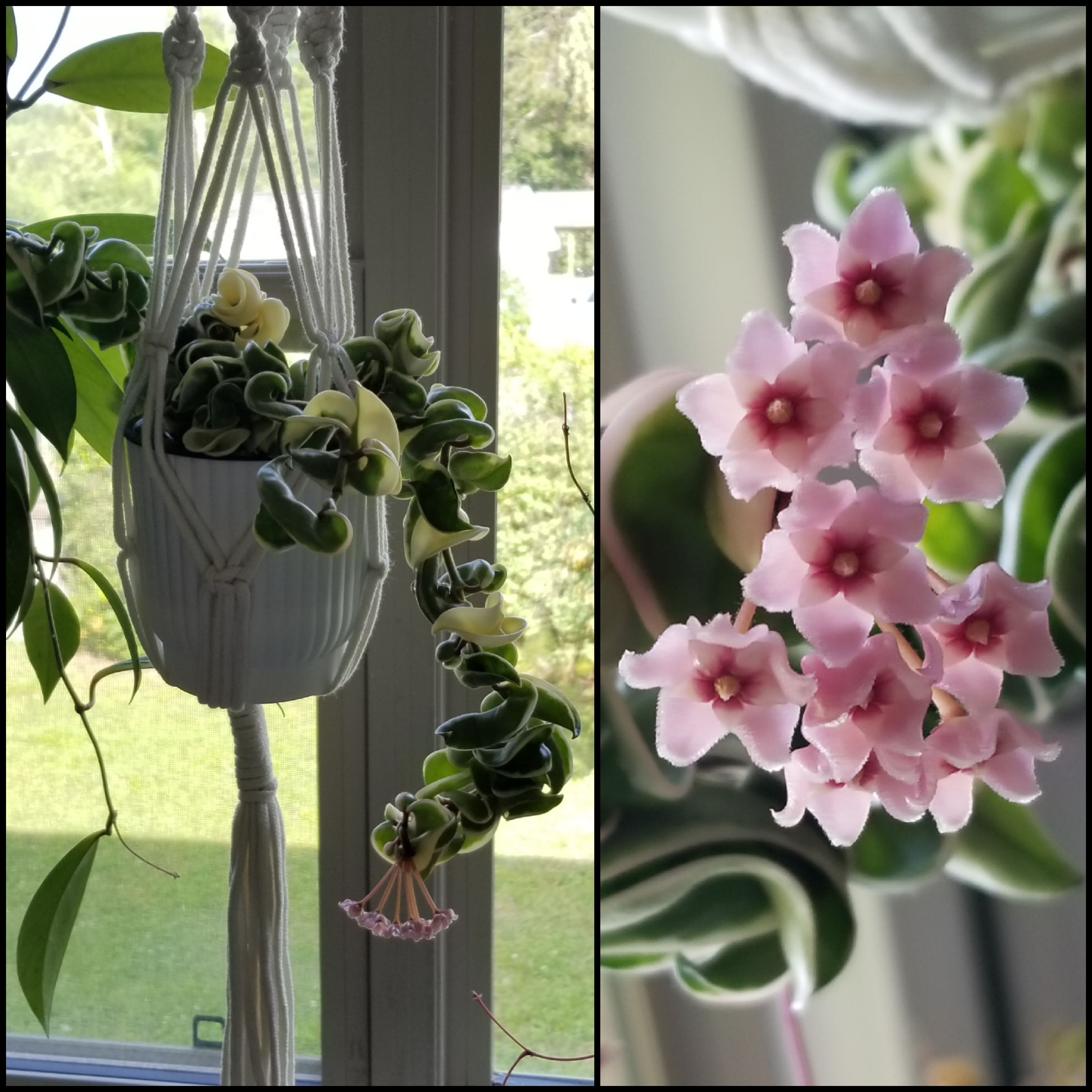
These cute little blooms opened up today. Look how adorable they were just before they opened:

53
 
 
54


Looking for the wisdom of the more experienced. I have what I think is pest damage on my alocasia. I was suspicious of spidemites, but haven’t visualized any pests on the plant. I have been showering it and treating with insecticidal soap. The last leaf came out facing upwards and bowed, and it’s working on a new leaf now. It’s been next to another alocasia (that I’ve also been treating), but I’m not having issues with it. I also did accidentally let its water reservoir go dry. I don’t think that helped anything, but I don’t think it was the cause.

55


They really do smell a bit like chocolate. Had this plant for almost 2 years now and it's finally showing its love.

56


I bought a banana tree in August of 2021 and never thought it would actually fruit. I was walking by it the other night and saw something purple/maroon out of the corner of my eye. Popped my head between some leaves and was greeted by some baby bananas!

57


I converted into a GIF, but somehow the file size increased from 4 to 120 MB 🥴
So, here's the video :)

58


I have a bit of a conundrum. Twice now I've seen fairly large mealy bugs in this ping's dish. ordinarilly I'd dunk the whole plant (roots and all) into insectidal soap for 30 minutes. With pings though I worry the leaves are too sensitive.

Has anyone ever successfully treated pinguiculas for mealy bugs or other soft bodied pests?

Luckily it's in my quarantine so it hopefully won't spread to my whole collection. Below is a closeup of the culprit, along with the plants in that room (mostly newly bought pings...)

59


I've already made a few posts about my small carnivorous plants collection a while ago and decided to do another one :)

I already did a lot of research about mineralic/ inorganic substrates and hydroponics in regards of CPs, but found basically nothing. Most people grow them in peat and consider it essential.

I wanted to prove it otherwise, because I find peat unethical and also largely prefer to cultivate my (house-)plants without soil in LECA.

Remember, my plants aren't old (<1 year, many even just a few months), so consider this as experimental observations, not as guide! I don't know how they will perform long term!


Nepenthes

They are doing absolutely great!

Somehow, I originally thought they don't need much light, so they looked pretty miserable the first months. One has even completely lost its roots...

But now, I've hung them in my brightest window and WOW.
The red one is starting to bounce back, and the green one is thriving. It is growing lots of pitchers and has formed quite a few new waxy leaves.

I fertilize it by filling the pitchers with full strength nutrient solution almost to the brim, because I noticed they drink up most of it in a matter of days.

The substrate (100% LECA) is watered with RO water only, but I add a bit of regular nutrient solution about once a month to speed up growth.

They can both absorb nutrients through the pitchers AND roots, but if you overdo it with root fertilization, they are fully fed and will stop producing pitchers.

I'm also feeding one pitcher with dead insects, and the other one with said nutrient solution, because I wanna see how they react to each.


Pinguicula

Pings in nature often grow on limestone rocks and wood, so many CP enthusiasts cultivate them on mostly inorganic media like pumice.

And what shall I say, it works! I took quite a few leaf cuttings, and look how cute they are! ☺️

I started cultivating moss recently, and I'm currently in the process of adding a layer of live moss on the surface. It looks cool, holds moisture (pings have shallow roots that are prone to desiccation) and harbours microfauna like springtails, which can act as first food for baby pings ;)
It also helps decomposing dead flies.

This one is my P. agnata

And this my very newly bought P. moranensis


Drosera

This one is by far the hardest for me and the exception.

In nature, they are bog plants, and they need peat to survive.

Here's my Drosera alicae, which I tried to repot into hydro conditions:

It didn't even survive one month in there.

(Ignore the sphagnum moss, I added it way too late.)

And here's the same plant, but kept in its original substrate, but with living sphagnum added later on

It even started flowering!


Sarracenia

Not a houseplant, but still carnivorous. It requires bog conditions, direct sun and chilly winters to survive.

It lives in my newly built bog bucket on my balcony. The bucket is filled with concrete as a weight to hold a pole, and then I added a few centimetres of leftover lava rock/ LECA.

I've had the Sarracenia in way too dark conditions for too long, that's why it looks so miserable.

Now, since it recieves more light, it started forming new pitchers. I also added a bit of living sphagnum a few weeks ago.


Sphagnum/ moss farm

As I said in the beginning, some CPs can be grown on alternative substrates, but some require very acidic, completely mineral free media.

Peat is one of them, but not the only one.
It's made out of dead sphagnum mosses, so why not just use those instead?

I made a post about that a few days ago, but here's a quick recap.

I got a bit of live sphagnum moss from a neighbour and put it into plastic boxes with some moist LECA as substrate.

I want to grow as much of it as I can and then use it as a substrate for the obligate bog plants.

60


cross-posted from: https://slrpnk.net/post/23641560

I have most of my plants in hydro, but especially my carnivorous plants need (Sphagnum) moss to grow.

It, and peat, just has the right, unique properties to ensure the CPs thrive that cannot be replaced by other substrates.

Sphagnum in particular can for example replace minerals and turn them into acid, creating a mineral-free, highly acidic environment many bog plants have evolved to live in.

But I also find them just beautiful and they make a great top dressing, for example for my Pinguicula.

Here's a Drosera, a peat bog plant, that I tried to grow in LECA alone. It didn't even take a month and it was dead. The ones in peat thrive tho.

(I added the live sphagnum a week ago in hopes it will revive it)


Here's my process:

I take a transparent box and add a few centimeters of LECA, which has been soaked thoroughly, because mosses are pretty sensitive to leftover minerals.

Then, I add distilled water just right below the surface. It is always kept wet by capillary action, while the moss sits above and gets hydrated.

The moss is plucked apart or cut with a pair of scissors. Every tiny leaf will grow to the original form it came from.

Then, the box is placed in a bright spot. Just make sure it isn't too hot, like it happened in my parents' greenhouse :(

Before:

After a too hot day (it was steamingly hot):

If you grow it indoors, a sunny spot behind a curtain is great.

I will soon lightly spray fertilize it when I see good new growth, but be careful, it's very sensitive to too much salts.

I just started this project about one week ago, and I can give you an update in a few months if you're interested :)

61